Explore Mù Cang Chải

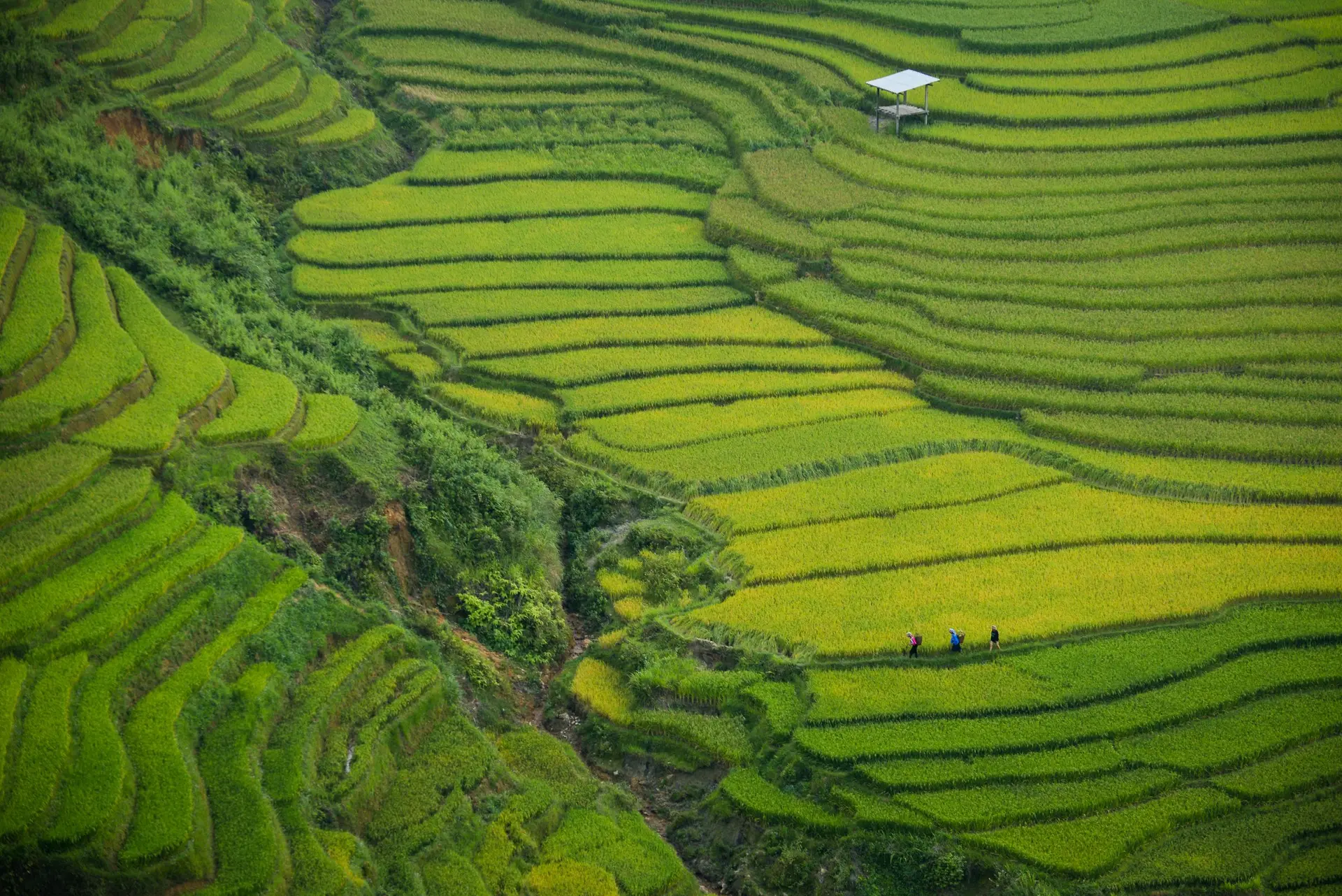
Mù Cang Chải is famous for its rice terraces, a Special National Relic of Vietnam since 2019. Around the hotel you will also find the Khau Phạ pass, waterfalls, bamboo forests, markets and Hmong and Thái villages.

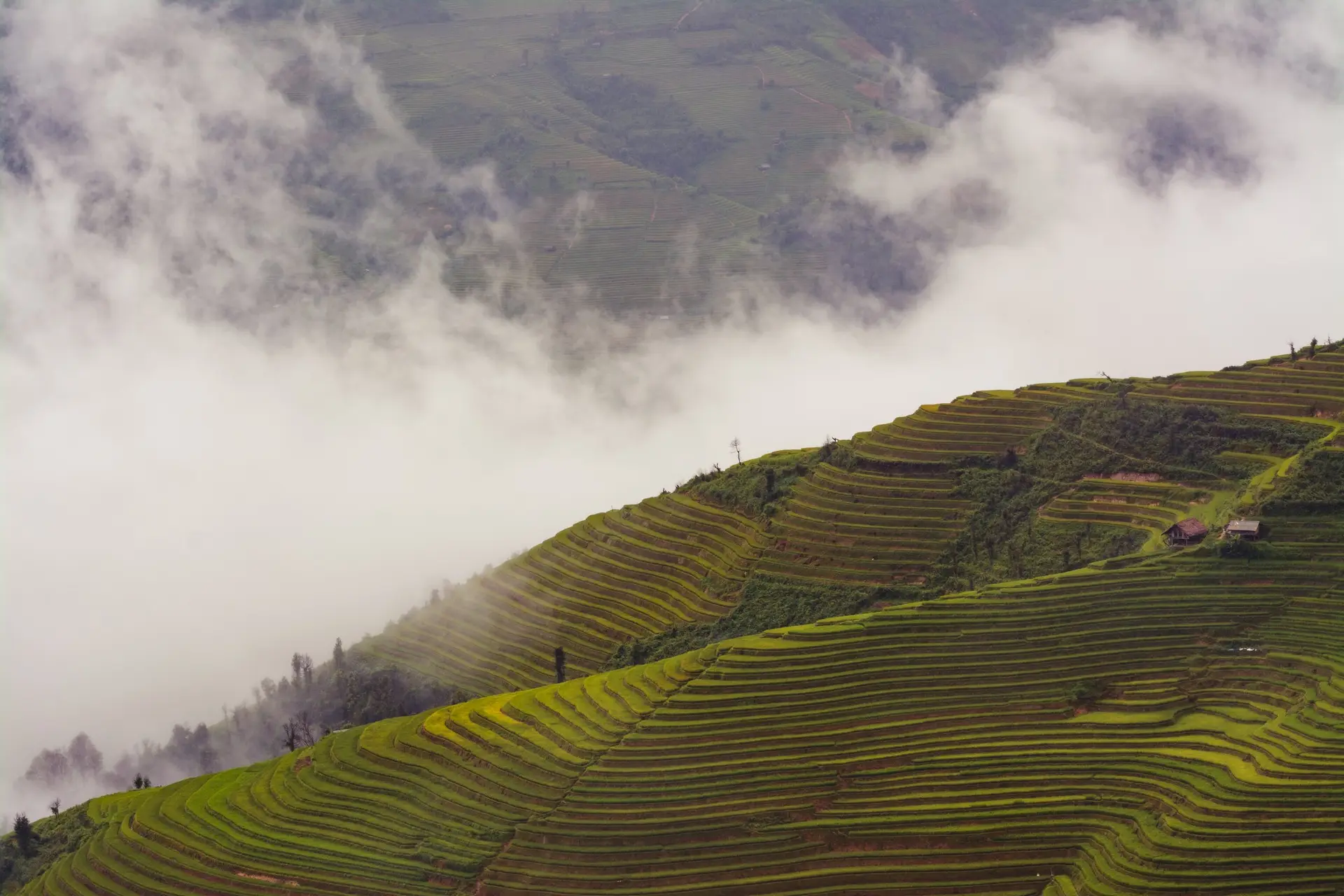
Curved rice terraces on mountain slopes with distant ridges
Curved terraces on the mountain slopesPhoto: Quang Minh Hotell

The seasons

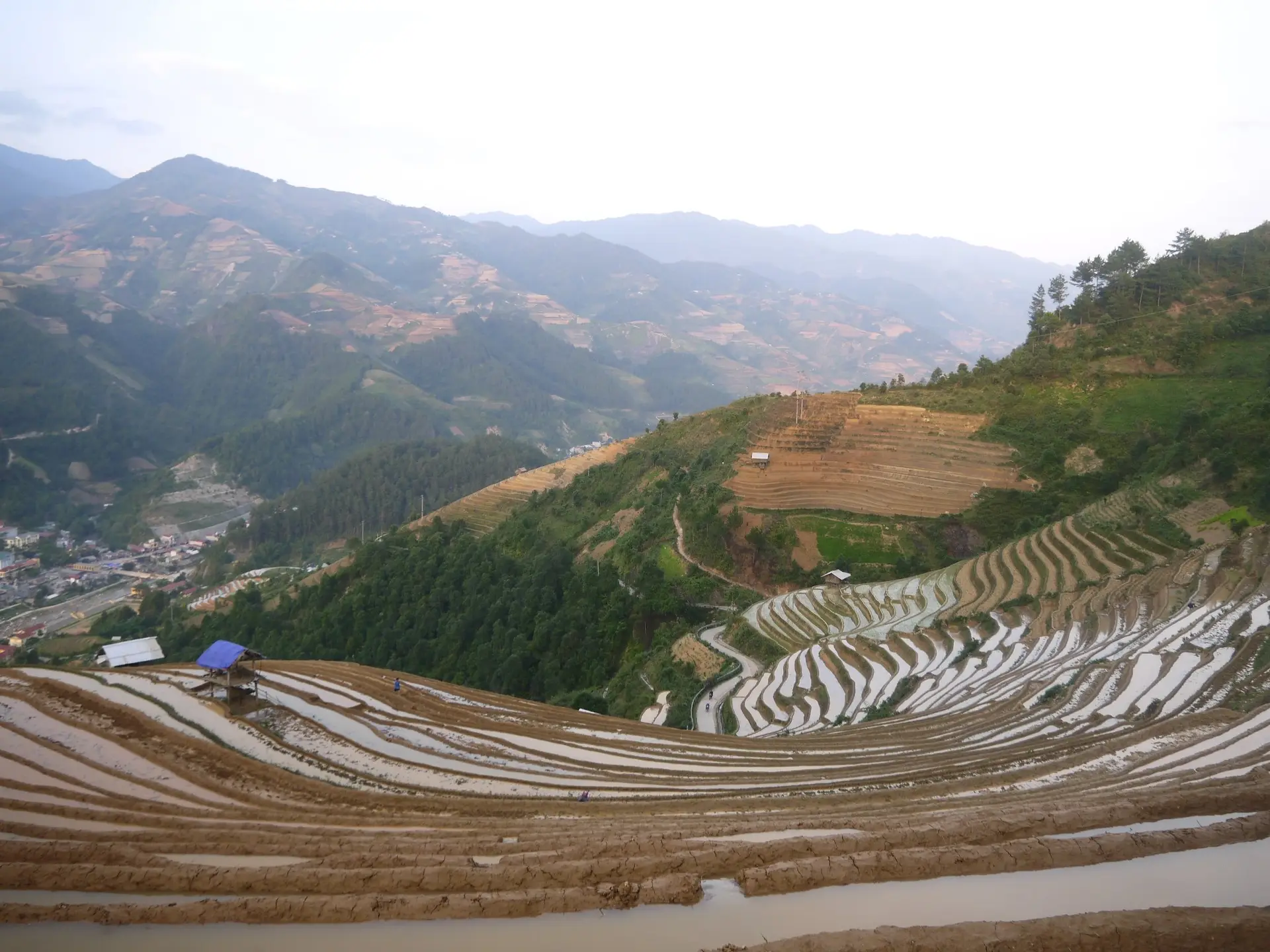
The terraces look different in every season: flooded in late May and June, green in summer, gold from mid-September to mid-October, and bare with blossom in winter.

Seasons in Mù Cang Chải
SeasonWhen (approx.)What you see
Winter and blossom seasonDecember to FebruaryCold, dry, clear weather, with pink tớ dày blossom from mid-December to January and peach and plum blossom after it. The paddies lie fallow.
Spring and ploughing seasonMarch to AprilWarmer, mostly dry weather. Farmers repair the terrace walls and plough, and there are few tourists.
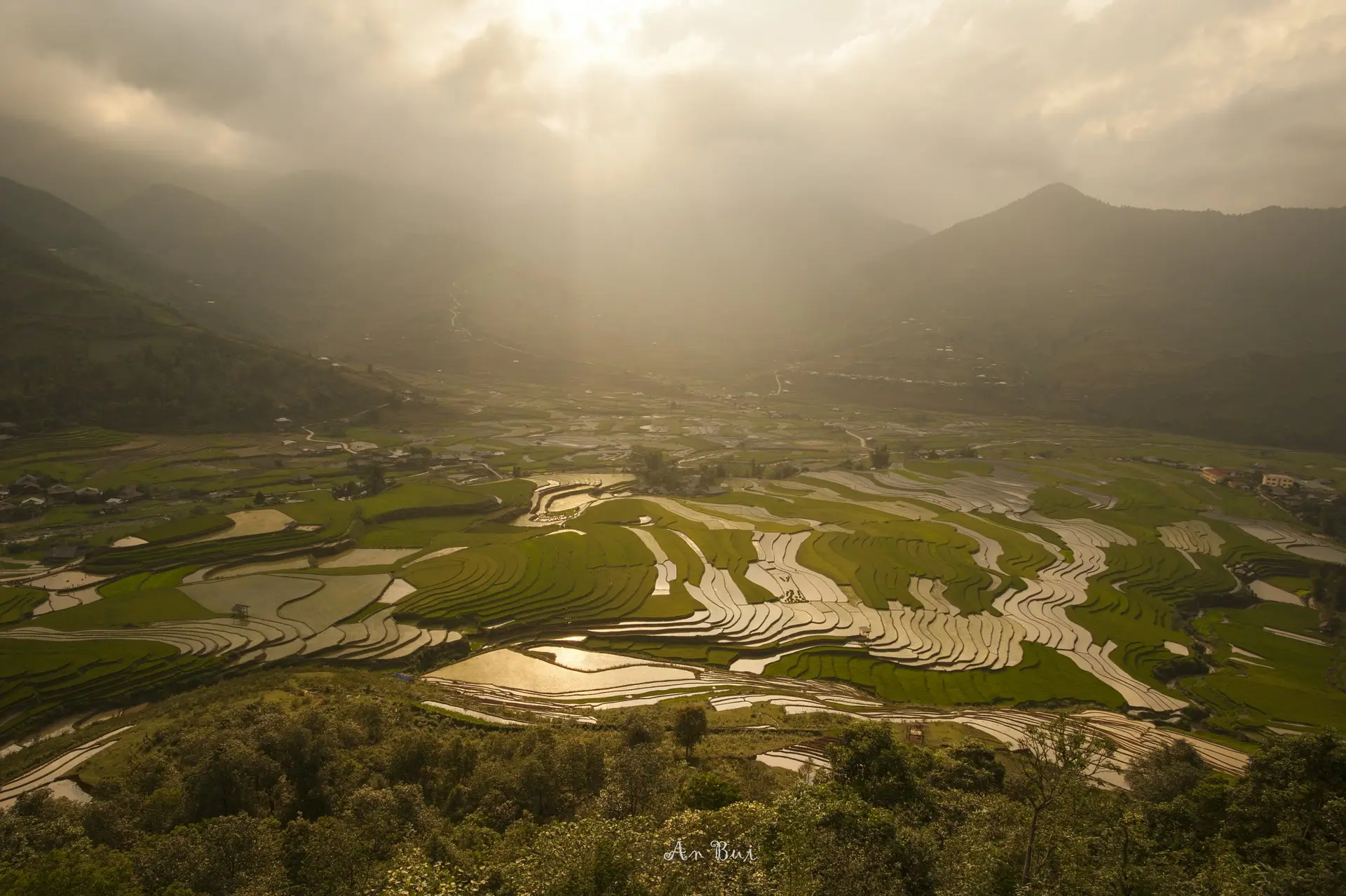
Water-pouring seasonMid-May to mid-June (usually at its best in late May and early June)The first rains are led into the terraces, turning whole hillsides into mirrors while the rice is planted.
Green seasonLate June to AugustLush green terraces and full waterfalls in the wettest months. The Tú Lệ valley starts to turn gold in mid-August.
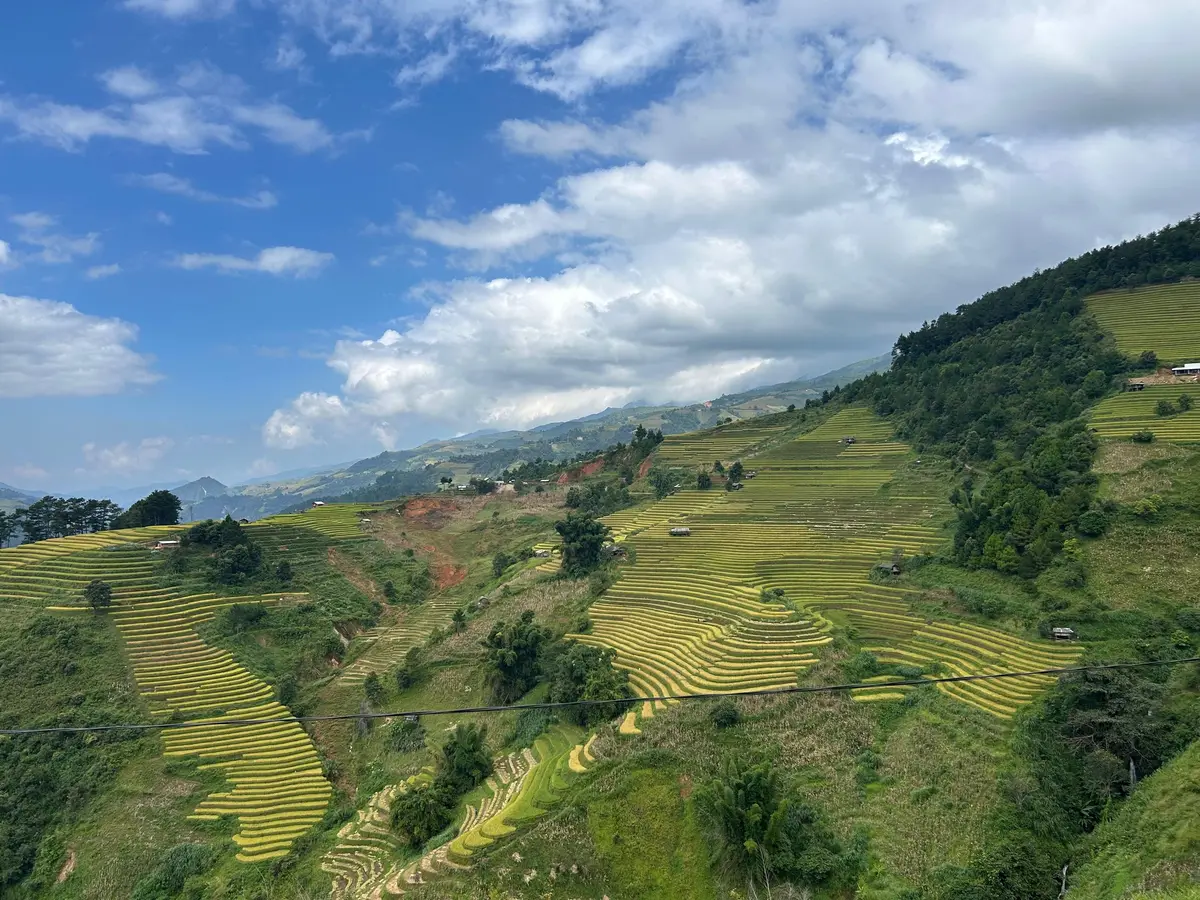
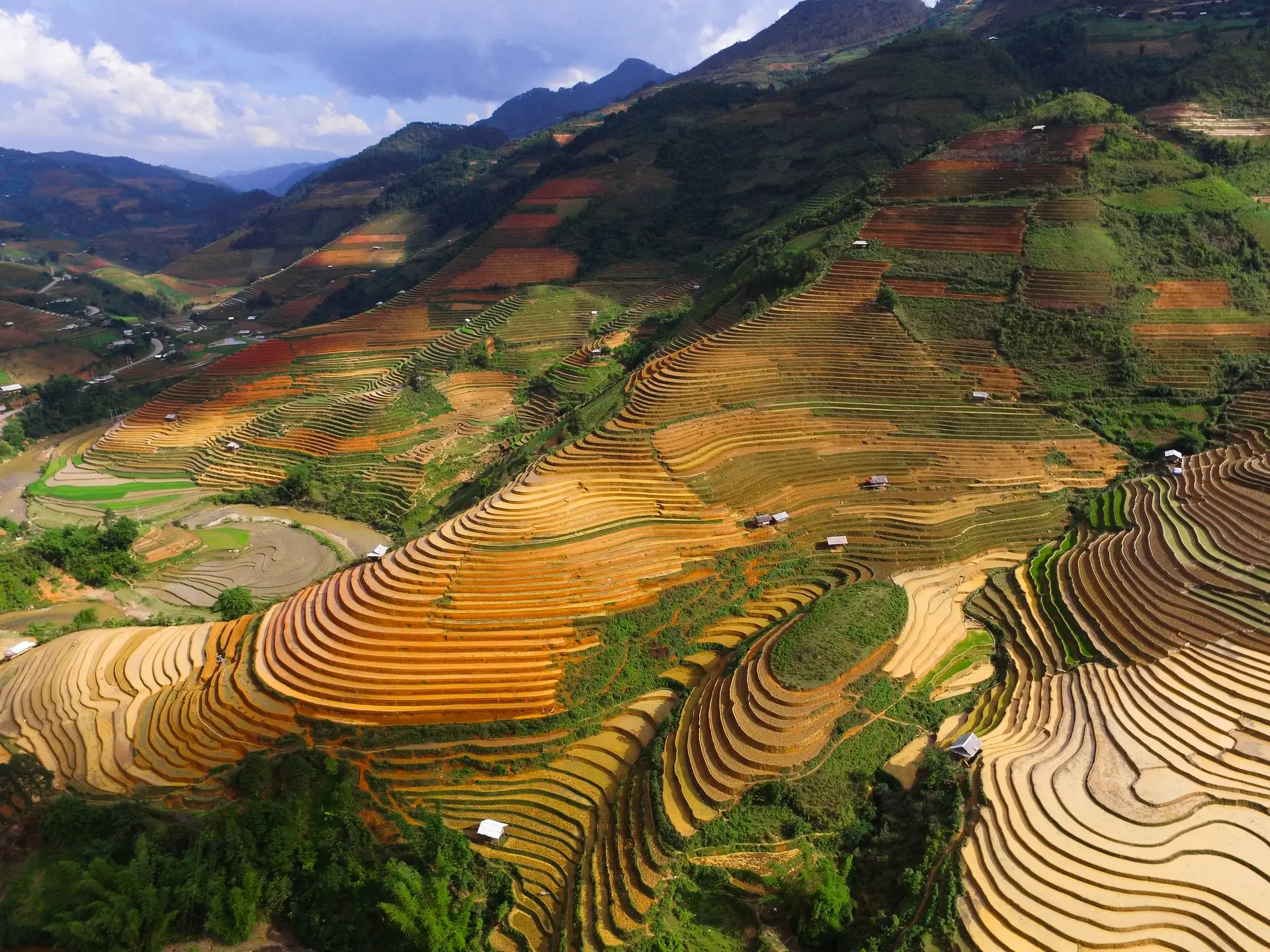
Golden harvest seasonMid-September to mid-October (Tú Lệ: mid-August to early September)The rice ripens from the valleys up to the high terraces. The colour usually peaks in the last week of September and the first week of October, and then the harvest begins.
Post-harvest and cloud seasonLate October to NovemberHarvested terraces and drying rice straw in cool, dry weather, with seas of cloud at dawn and far fewer visitors.

Best time to visit

Places to see

Rice terraces, viewpoints, passes and villages around Quang Minh Hotell. Distances and times are approximate, by road from the hotel.

Map pins for areas mark the centre of the area, not a specific viewpoint.

The big picture

What makes Mù Cang Chải special: the terraces and the people who built them.

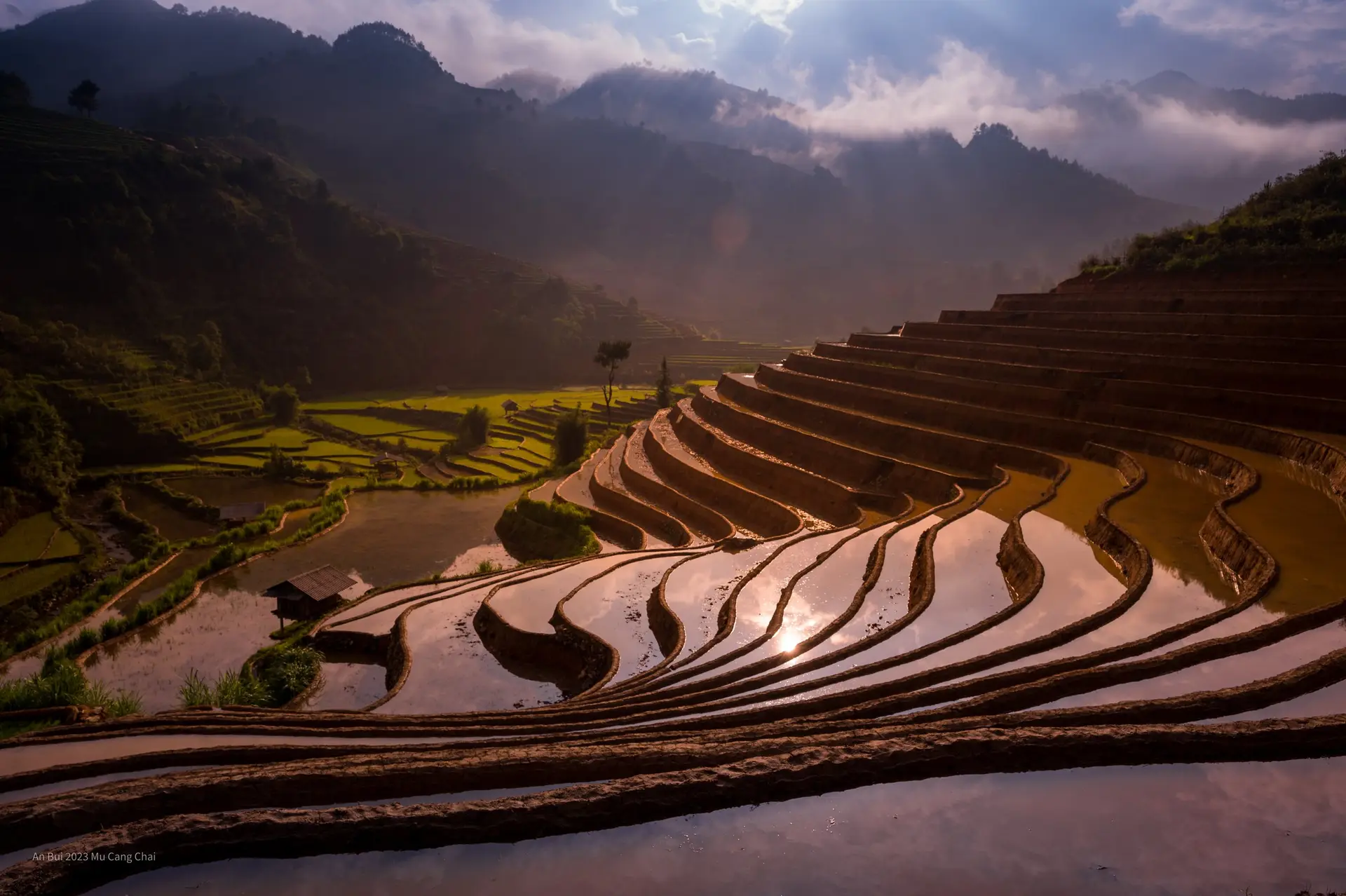
Flooded terraces at dusk, Mù Cang ChảiPhoto: An Bui (Vietnam Photo Tours), CC BY 2.0

Rice terraces

Mù Cang Chải rice terraces

Generations of Hmong farmers carved these terraces into the slopes, levelling each step and leading water down from streams, often through split bamboo pipes. On 31 December 2019, Prime Minister's Decision 1954/QĐ-TTg made them a Special National Relic of Vietnam; they are not a UNESCO site. More than 800 hectares are protected, in the former communes of La Pán Tẩn, Chế Cu Nha, Dế Xu Phình, Kim Nọi, Mồ Dề and Lao Chải. Terraces line much of road QL32, including the fields around the hotel.

Best time
Late May to mid-June for flooded terraces, July and August for green, mid-September to mid-October for gold.
Getting there
The terraces start around the hotel. See the viewpoints below for distances.
Tip
Stay on the paths and never walk on the terrace walls: they are fragile, and they are the farmers' livelihood.
Sources

Culture

Hmong culture and crafts

Close to 90% of the people of Mù Cang Chải are Hmong, with Thái and Kinh communities in the valleys. The Hmong keep up crafts such as blacksmithing, hemp weaving, silver jewellery and beeswax batik. Their New Rice ceremony, held when the rice ripens, has been national intangible cultural heritage since 2021, and the Gầu Tào hill festival takes place around Lunar New Year.

Best time
September and October for the New Rice ceremony; Lunar New Year and spring for Gầu Tào.
Tip
Ask before you photograph people, and buy crafts directly from the people who make them.
Sources

Near the hotel

On foot or a short ride from Khim Nọi village.

Market

Mù Cang Chải town market

about 0.9 km from the hotel · about 5 min by road

Hmong and Thái families from the surrounding villages meet at the market in the town centre, and mornings are the liveliest time. The area has two other main markets, at Ngã Ba Kim on QL32 towards Khau Phạ and at Khao Mang.

Best time
All year, early in the morning.
Getting there
About 0.9 km from the hotel, within walking distance.
Tip
Market days can change, so ask us which morning is busiest before you go.
Sources

Culture

Khim Nọi Thái village

Khim Nọi is a community-tourism village on the edge of Mù Cang Chải town, the same neighbourhood as the hotel; in 2023 its 86 households were all Thái. Visitors can see traditional stilt houses, watch xòe and bamboo-pole dances, take herbal leaf baths, cycle through the paddies and try local food.

Best time
All year.
Getting there
Right around the hotel, in Khim Nọi village.
Tip
Take an evening walk through the village, and ask us what is on during your stay.
Sources

Viewpoint

Horseshoe Hill (Sáng Nhù)

Đồi Móng Ngựa (Horseshoe Hill) is in Sáng Nhù hamlet, about 2 km from the town centre. Its terraces curve round in the shape of a horseshoe. Along with Mâm Xôi and Mũi Giày it is one of the best-known terrace hills of Mù Cang Chải, and photographers favour it at sunset.

Best time
Late May to June for flooded terraces; late September to mid-October for golden rice.
Getting there
About 2 km from the town centre. A small entrance fee is charged.
Tip
Come in the late afternoon and stay for the sunset light.
Small entrance fee
Sources

Waterfall

Mơ waterfall (Thác Mơ)

about 4.4 km from the hotel · about 20 min by road

Thác Mơ is a series of cascades along more than 3 km of the Nà Háng stream, which rises on the Nà Háng peaks and joins the Nậm Kim river near the town centre. The falls are just over 2 km from QL32, about a 30-minute walk.

Best time
May to October, when there is more water. The paths are easier in the dry season.
Getting there
About 4.4 km by road from the hotel, plus a walk of about 30 minutes.
Tip
Wear shoes with good grip: rocks by the stream are slippery, especially in the rainy months.
Sources

Viewpoint

Kim Nọi viewpoint

Kim Nọi was a commune of its own until 2025 and is now part of Mù Cang Chải commune, the hotel's area. A concrete lane climbs to the village, and from there a walk of about 300 m leads to a rock outcrop looking out over the terraces. It is much quieter than Mâm Xôi, and visitors recommend it for sunrise and sunset light.

Best time
Late September to mid-October for golden rice; June for flooded terraces.
Getting there
About 8 km from the town market along a concrete lane, then about 300 m on foot. Motorbikes manage the lane easily; small cars can pass, but some sections are too narrow for two vehicles to meet.
Tip
Go at sunrise for soft light and few people. Ask us for directions before you set off.
Sources

Village

Háng Đăng Dê terraces

Háng Đăng Dê (also written Háng Đăng Dề) is a small Hmong hamlet in Mù Cang Chải commune. According to Vietnamese travel press, its terraces have been farmed for more than 400 years. It sees far fewer visitors than La Pán Tẩn or Mâm Xôi.

Best time
Late September to early October, when the rice is golden.
Getting there
Through the Kim Nọi terraces, or from the town centre via Bản Thái. The lanes are steep and narrow.
Tip
Go with a local driver or guide rather than riding the steep lanes yourself. Ask us for the way.
Sources

Nature

Bamboo forests (Mồ Dề and Nả Háng Tủa)

about 22 km from the hotel · about 40 min by road

The Mồ Dề bamboo forest is about 80 years old and covers roughly 3 ha, at the top of a small, steep road that climbs about 3.5 km from QL32. The Nả Háng Tủa bamboo forest in Púng Luông is about 20 km from town, with the last stretch on foot or by motorbike. Both charge a small entrance fee.

Best time
All year. The dry months, October to April, make the lanes easier.
Getting there
Mồ Dề: about 3.5 km of steep lane above QL32. Nả Háng Tủa: about 20 km from town.
Tip
If you are not an experienced rider, take a local motorbike taxi up the steep Mồ Dề lane.
Sources

The terrace heartland

The famous terraced valleys, about 15 to 50 minutes by road.

Water-pouring season in Dế Xu PhìnhPhoto: Gió Đông, Public domain

Rice terraces

Dế Xu Phình and Mũi Giày hill

about 10 km from the hotel · about 15 min by road

Dế Xu Phình, now part of Púng Luông commune, is one of the six former communes in the protected terrace zone. Its best-known spot is Đồi Mũi Giày ('shoe-tip hill'), about 2 km from Mâm Xôi, where a bamboo bridge crosses the stream below the terraces.

Best time
Mid-September to mid-October for golden rice; late May to June for flooded terraces.
Getting there
About 10 km by road from the hotel, beside QL32.
Tip
It is one of the closest terrace valleys to the hotel, so it is easy to fit in early or late in the day.
Sources
Golden terraces in Chế Cu NhaPhoto: Doan Tuan, CC0

Rice terraces

Chế Cu Nha

about 14 km from the hotel · about 40 min by road

Chế Cu Nha is one of the historic core terrace areas and lies inside the Special National Relic zone. Since 2025 it has been part of Mù Cang Chải commune. The village is a starting point for the walk of about 3 km to the Dinosaur Spine ridge, and the Mù Cang Chải Ultra Trail passes through it.

Best time
Mid-September to mid-October for golden rice; late May to June for flooded terraces.
Getting there
About 14 km by road to the centre of the former commune. The terraces are spread out, so some viewpoints are further.
Tip
Combine it with the walk to the Dinosaur Spine ridge on a clear, dry day.
Sources

Rice terraces

Lao Chải terraces and horseshoe viewpoint

about 15 km from the hotel · about 35 min by road

Lao Chải lies about 10–12 km west of the town centre and is one of the six communes in the protected terrace zone. OpenStreetMap marks two viewpoints there: 'Móng ngựa Lao Chải', a horseshoe of terraces, and the 'Nấm Linh Chi' terraces.

Best time
Late May to June for flooded terraces; mid-September to mid-October for golden rice.
Getting there
About 15 km by road from the hotel.
Tip
It is on the western side of the hotel, away from the Khau Phạ traffic, so it makes an easy half-day trip.
Sources

Market

Ngã Ba Kim junction and market

about 18 km from the hotel · about 25 min by road

Ngã Ba Kim is the settlement on QL32 where the roads to La Pán Tẩn, Mâm Xôi and Púng Luông leave the main road. It has one of the three main markets of the area, and most trips to Khau Phạ, Mâm Xôi or Púng Luông pass through it.

Best time
All year.
Getting there
About 18 km by road from the hotel, on QL32.
Tip
You will pass through it on the way to Mâm Xôi or Khau Phạ; ask us about market days if you want to stop.
Sources
Cloud over the terraces of La Pán TẩnPhoto: Văn Ngọc Tăng, CC0

Rice terraces

La Pán Tẩn

about 24 km from the hotel · about 40 min by road

La Pán Tẩn was a commune of its own until 2025, when it became part of Púng Luông commune. It sits high on the slopes of Khau Phạ mountain, at up to about 2,000 m, inside the Special National Relic terrace zone. Besides Mâm Xôi hill it has homestays and lodges, and the Mù Cang Chải Ultra Trail runs through it.

Best time
Mid-September to mid-October for golden rice; late May to June for flooded terraces.
Getting there
About 24 km by road from the hotel via Ngã Ba Kim on QL32.
Tip
It is cooler up here than in town, so bring a warm layer. Ask us for this year's Ultra Trail dates if you want to watch or avoid the race.
Sources

Rice terraces

Púng Luông

about 24 km from the hotel · about 35 min by road

In 2025 the former communes of Nậm Khắt, La Pán Tẩn, Dế Xu Phình and Púng Luông merged into a new Púng Luông commune, so much of the famous terrace scenery is now officially in Púng Luông. The commune hosts the Hmong New Rice ceremony (Lễ mừng cơm mới), national intangible cultural heritage, during its golden-season programme.

Best time
Mid-September to mid-October, for the golden rice and the New Rice ceremony.
Getting there
About 24 km by road from the hotel via Ngã Ba Kim.
Tip
Ask us for this year's golden-season programme and the date of the New Rice ceremony.
Sources

Rice terraces

Mâm Xôi hill (La Pán Tẩn)

about 26 km from the hotel · about 50 min by road

Đồi Mâm Xôi means 'sticky-rice tray hill'. It lies in the former La Pán Tẩn commune, now part of Púng Luông commune, and its terraces spiral from the foot of the hill up to a flat top. This is the view most people picture when they think of Mù Cang Chải, and a smaller, quieter 'Mâm Xôi bé' is close by. Visitors pay a small fee and walk the last stretch.

Best time
Mid-September to mid-October for golden rice; late May to June for water, if the rains have come.
Getting there
About 26 km by road from the hotel via Ngã Ba Kim, then a short walk. Local drivers may know a shorter way. A small entrance fee is charged.
Tip
Stay behind the railings of the photo platforms: local authorities have warned that climbing them is dangerous.
Sources

Viewpoint

Dinosaur Spine ridge (Phình Hồ)

The 'dinosaur spine' (sống lưng khủng long) is a ridge path lined with closely packed rock outcrops near Phình Hồ hamlet. It looks out over Dế Xu Phình, La Pán Tẩn, Chế Cu Nha and Mồ Dề. A small fee is charged.

Best time
September to November, when the trails are drier: golden rice first, then the harvested fields.
Getting there
On foot: about 3 km from Chế Cu Nha or about 7 km from Dế Xu Phình. Local motorbike taxis can cover part of the way.
Tip
Wear shoes with good grip and go on a dry day; the rocks are slippery when wet.
Small entrance fee
Sources

Khau Phạ pass and Tú Lệ

The high pass on the road from Hanoi, and the valley below it.

Ripening rice below the Khau Phạ passPhoto: Doan Tuan, CC0

Mountain pass

Khau Phạ pass

about 28 km from the hotel · about 35 min by road

In the Thái language, Khau Phạ means 'horn of the sky'. It is the longest and most rugged pass on national road QL32, with more than 30 km of bends at about 1,200–1,500 m between Tú Lệ and Mù Cang Chải. Everyone arriving from Hanoi crosses it. The top is often in fog, and snow has been recorded in severe winters.

Best time
September and October for the golden valley below; October to March for seas of cloud.
Getting there
About 28 km by road from the hotel to the summit area.
Tip
In fog or heavy rain, slow down or travel with a local driver, and try to cross in daylight.
Sources

Activity

Paragliding at Khau Phạ

about 33 km from the hotel · about 40 min by road

The take-off near Khau Phạ is at about 1,260 m. Tandem flights with professional pilots last about 10 to 30 minutes and land in the Lìm Mông and Tú Lệ valley. Every harvest season brings the paragliding festival 'Bay trên mùa vàng' ('flying over the golden season'), usually from late August into September.

Best time
Late August to October, when the valley is golden. Flights are possible at other times, weather permitting.
Getting there
About 33 km by road from the hotel to the take-off.
Tip
Flights depend on the weather, so keep a spare day and book ahead for weekends. Ask us for this year's festival dates.
Sources
Sunbeams over newly planted fieldsPhoto taken in the Tú Lệ valley, on road QL32 east of the Khau Phạ passPhoto: An Bui (Vietnam Photo Tours), CC BY 2.0

Village

Tú Lệ valley

about 48 km from the hotel · about 65 min by road

Tú Lệ is a broad Thái valley on QL32, on the Hanoi side of the Khau Phạ pass. It lies lower than the high terraces, so its rice ripens earlier, usually from mid-August to early September. The valley is known for cốm (flattened young green sticky rice) and upland sticky rice. A natural hot spring at 43–45 °C has separate pools by the stream.

Best time
Mid-August to early September for golden rice; September and October for cốm.
Getting there
About 48 km by road from the hotel, over the Khau Phạ pass.
Tip
If you arrive from Hanoi, stop here on the way: pack swimwear for the hot spring.
Sources

Further afield

Wild forest and remote valleys for experienced travellers with a local guide.

Nature

Mù Cang Chải Species and Habitat Conservation Area

about 35 km from the hotel · about 100 min by road

The reserve was created in 2006 and covers about 20,100 ha in Chế Tạo, Lao Chải and Púng Luông, on peaks of about 1,700 to 2,500 m in the Hoàng Liên Sơn range. It protects 764 recorded species of vascular plants, ancient pơ mu and thiết sam trees and the critically endangered western black crested gibbon (Nomascus concolor). There are no visitor facilities, and ecotourism is only planned.

Best time
October to April, when the trails are drier.
Getting there
About 35 km by road to Chế Tạo, in the core zone; allow about 1 hour 40 minutes on rough roads.
Tip
Treat it as protected wilderness: go only with a local guide, and do not expect to see gibbons.
Sources

Village

Chế Tạo

about 35 km from the hotel · about 100 min by road

Chế Tạo lies entirely inside the Mù Cang Chải Species and Habitat Conservation Area, south of Lao Chải on the border with Sơn La and Lai Châu provinces. It has six hamlets, and its last hamlets only got mobile signal in May 2025. The roads are rough and often damaged.

Best time
October to April, the dry season.
Getting there
About 35 km by road; allow about 1 hour 40 minutes.
Tip
Go only if you are an experienced rider, or with a local guide, and expect little or no mobile signal.
Sources

Nature

Ngọc Chiến hot springs (further afield)

about 48 km from the hotel · about 80 min by road

Ngọc Chiến, in Sơn La province, is a Thái valley with hot-spring pools. From Mù Cang Chải, travellers reach it on motorbike trips through Púng Luông and Nậm Khắt, so expect a long day on mountain roads.

Best time
October to April, when the roads are drier.
Getting there
About 48 km by road; allow about 1 hour 20 minutes each way.
Tip
Start early, pack swimwear, and plan to be back before dark.
Sources

Culture

Close to 90% of the people of Mù Cang Chải are Hmong, with Thái and Kinh communities in the valleys.

The Hmong built the terraces and still farm them. They live on the slopes between about 800 and 1,700 m and keep up crafts such as blacksmithing, hemp weaving, silver jewellery and beeswax batik.

Their New Rice ceremony (Lễ mừng cơm mới), held when the rice ripens, has been national intangible cultural heritage since 2021. Around Lunar New Year and in spring, Hmong villages celebrate the Gầu Tào hill festival, with khèn (bamboo pipe) music and dancing.

The hotel's own neighbourhood, Khim Nọi, is a Thái village with traditional stilt houses. It runs community tourism with xòe and bamboo-pole dances, herbal leaf baths and cycling among the paddies.

Travel respectfully

The terraces are a protected relic and a living farm. A few simple habits help keep them that way.

  • Stay off the terrace walls

    Walk on the paths and never walk or sit on the terrace walls. They are fragile, and they are the farmers' livelihood. At harvest time, keep to the edges of the fields.
  • Pay the small fees

    Some viewpoints charge a small entrance fee. Please pay it: the fees help to pay for the viewpoints.

  • Stay behind the railings

    Do not climb the railings of makeshift photo platforms. Local authorities warned against this in 2025.

  • Ask before you take photos

    Ask before you photograph people, especially children. Please do not hand out money or sweets to children.

  • Buy crafts directly

    If you want to buy textiles, silver or batik, buy directly from the people who make them, for example at the markets.

  • Take your litter with you

    Take everything you bring back with you, on the trails and at the viewpoints.

  • Drones

    Under Vietnam's Decree 288/2025, drones over 250 g need a flight permit, and lighter drones must still keep out of prohibited and restricted zones.

Practical tips

Cash, signal, clothes and food: what to know before you travel to Mù Cang Chải.

  • Bring cash

    Bring enough cash in Vietnamese dong. There is an Agribank branch in Mù Cang Chải, but ATMs are scarce, rural ATMs can be unreliable with foreign cards, and cards are rarely accepted. Withdraw cash in Hanoi, Nghĩa Lộ or Sa Pa. Quang Minh Hotell accepts cash or bank transfer and has no card terminal.

  • Mobile signal and Wi-Fi

    The town and main roads have 4G, and coverage in remote villages has improved a lot since 2025. You can still lose signal on remote trails, so download offline maps. A local SIM or eSIM works well for WhatsApp and Zalo. The hotel has free Wi-Fi.

  • What to pack

    Pack layers and a warm jacket: days are warm, but evenings are cool, winters are cold and the viewpoints are colder still. From May to September, bring a rain jacket or poncho. Also pack shoes with good grip for muddy terrace paths, sun protection, motion-sickness tablets for the winding bus ride, and swimwear if you plan to visit a hot spring.

  • Altitude and weather

    The hotel is at about 940 m above sea level. The famous viewpoints are higher, at about 1,200 to 2,000 m, and several degrees colder than the town. Fog is common on the Khau Phạ pass.

  • Getting around

    The hotel rents out motorbikes. Many sights are up steep, narrow lanes, and in rain or fog a local motorbike taxi (xe ôm) is safer; many drivers also act as guides. Agree the route and price before you set off, and check that your licence and travel insurance cover riding a motorbike in Vietnam.

  • How long to stay

    Local guides recommend at least two days and one night. With three days you can add Tú Lệ, paragliding at Khau Phạ or a trek through Hmong villages.

  • Local food to try

    Try Tú Lệ cốm (flattened young green sticky rice, in September and October) and xôi nếp nương, upland sticky rice that also comes as five-colour sticky rice. Other local dishes are grilled black pig (lợn cắp nách), grilled stream fish, bitter bamboo shoots, bee pupae and thắng cố, a Hmong stew. Look out too for táo mèo (wild apple) wine and forest honey.

Check availability

Message us on WhatsApp (opens in a new tab)Check availability