Quang Minh HotellMù Cang ChảiBook
A small hotel among the rice fields of Mù Cang Chải
The best time to visit Mù Cang Chải is mid-September to mid-October, when the rice turns gold. For flooded, mirror-like terraces, come from late May to early June.
Last updated 25 September 2026
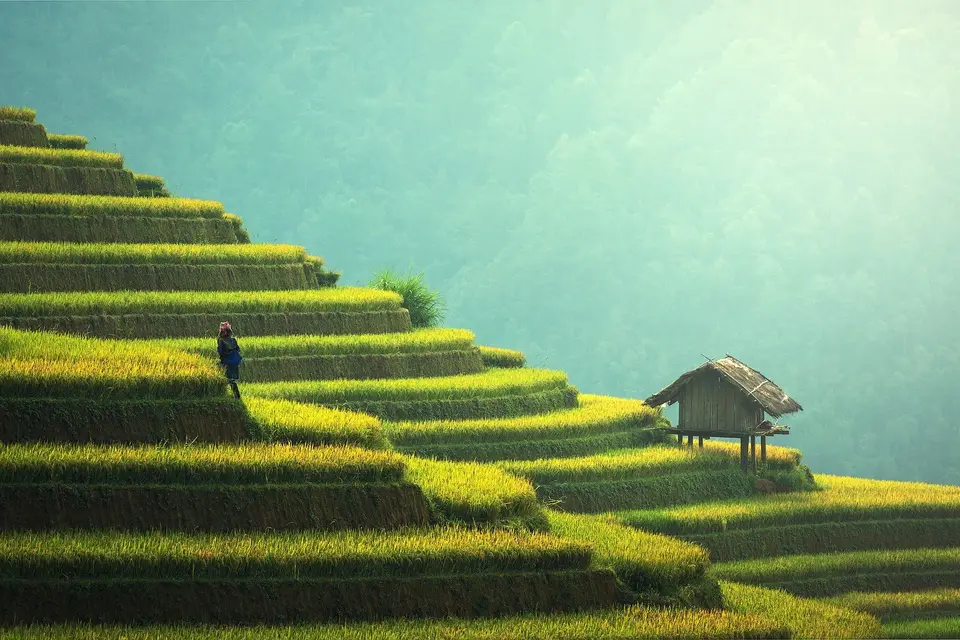
Mid-September to mid-October. The colour usually peaks in the last week of September and the first week of October. The lower Tú Lệ valley ripens earlier, from mid-August.
Mid-May to mid-June, usually at its best in late May and early June. Timing depends on the rain.
Late June to August: lush and green, but the wettest months of the year.
Pink tớ dày blossom from mid-December to January, then peach and plum blossom in January and February.
The dry season from October to March, best at dawn from high points such as Khau Phạ.
March and April, and November: quiet, mostly dry and good for walking, though the terraces are not green or gold.
The terraces look different in every season: flooded in late May and June, green in summer, gold from mid-September to mid-October, and bare with blossom in winter.
We do not have a good photo of this season yet.
December to February
Cold, dry, clear weather, with pink tớ dày blossom from mid-December to January and peach and plum blossom after it. The paddies lie fallow.
Tớ dày, a pink wild mountain peach that grows above 1,000 m, flowers from mid-December to January, with a peak of only 2 to 3 weeks. Peach and plum blossom follow in January and February. The terraces are fallow and brown.
Lunar New Year and the Hmong spring festivities, including Gầu Tào, fall in this season.
We do not have a good photo of this season yet.
March to April
Warmer, mostly dry weather. Farmers repair the terrace walls and plough, and there are few tourists.
Farmers prepare the terraces, repairing walls and ploughing the fields. It is a good time for walking and visiting villages, but not for the classic terrace photos.
Mid-May to mid-June (usually at its best in late May and early June)
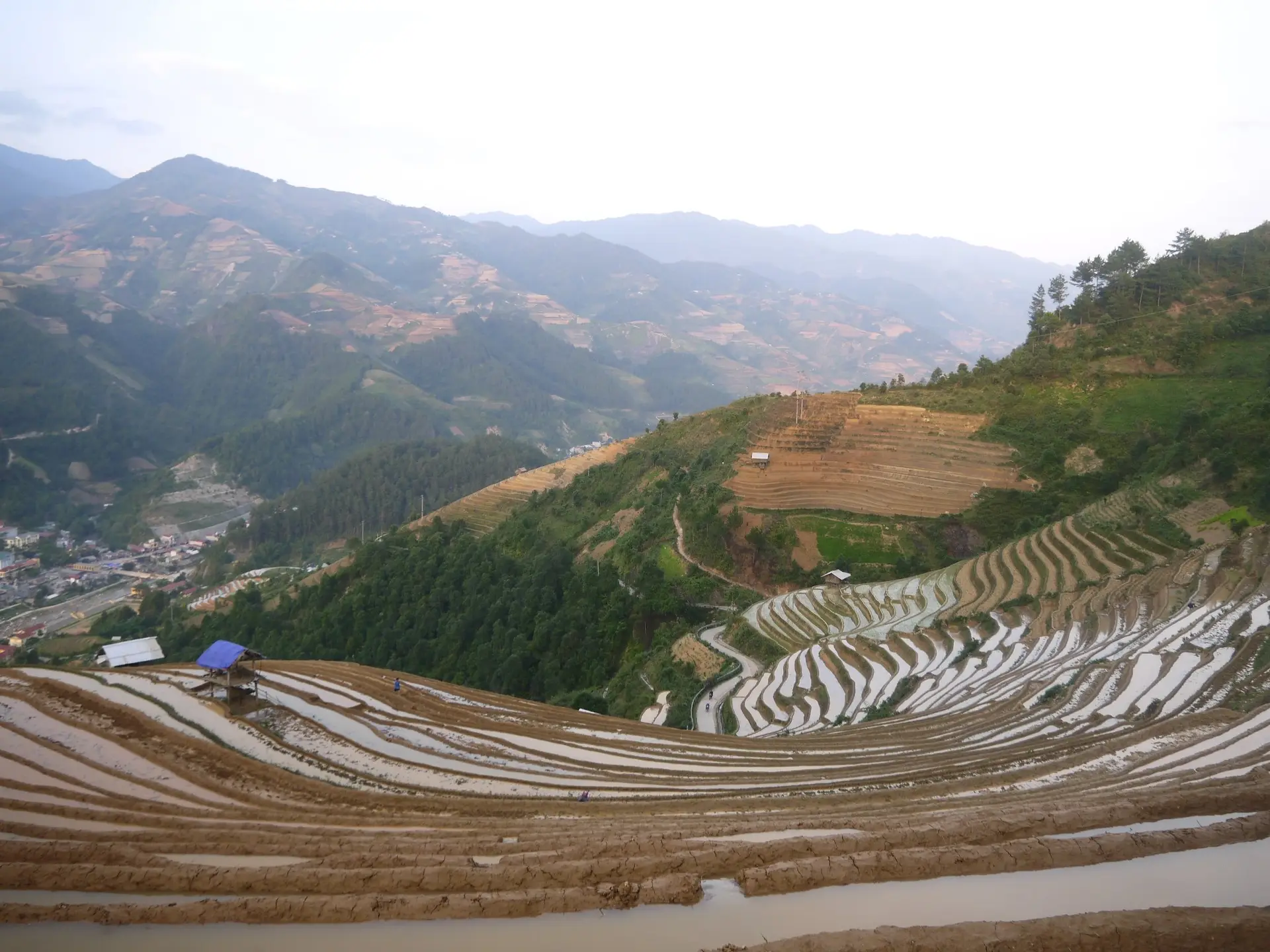
The first rains are led into the terraces, turning whole hillsides into mirrors while the rice is planted.
When the early-summer rains come, farmers channel stream water into the terraces to plant the rice, and the flooded steps reflect the sky. The exact timing depends on the rain, the altitude and the village, and it comes later in dry years.
Good places to see it are Horseshoe Hill at Sáng Nhù, Kim Nọi at sunrise, La Pán Tẩn, Lao Chải and Mâm Xôi.
Late June to August
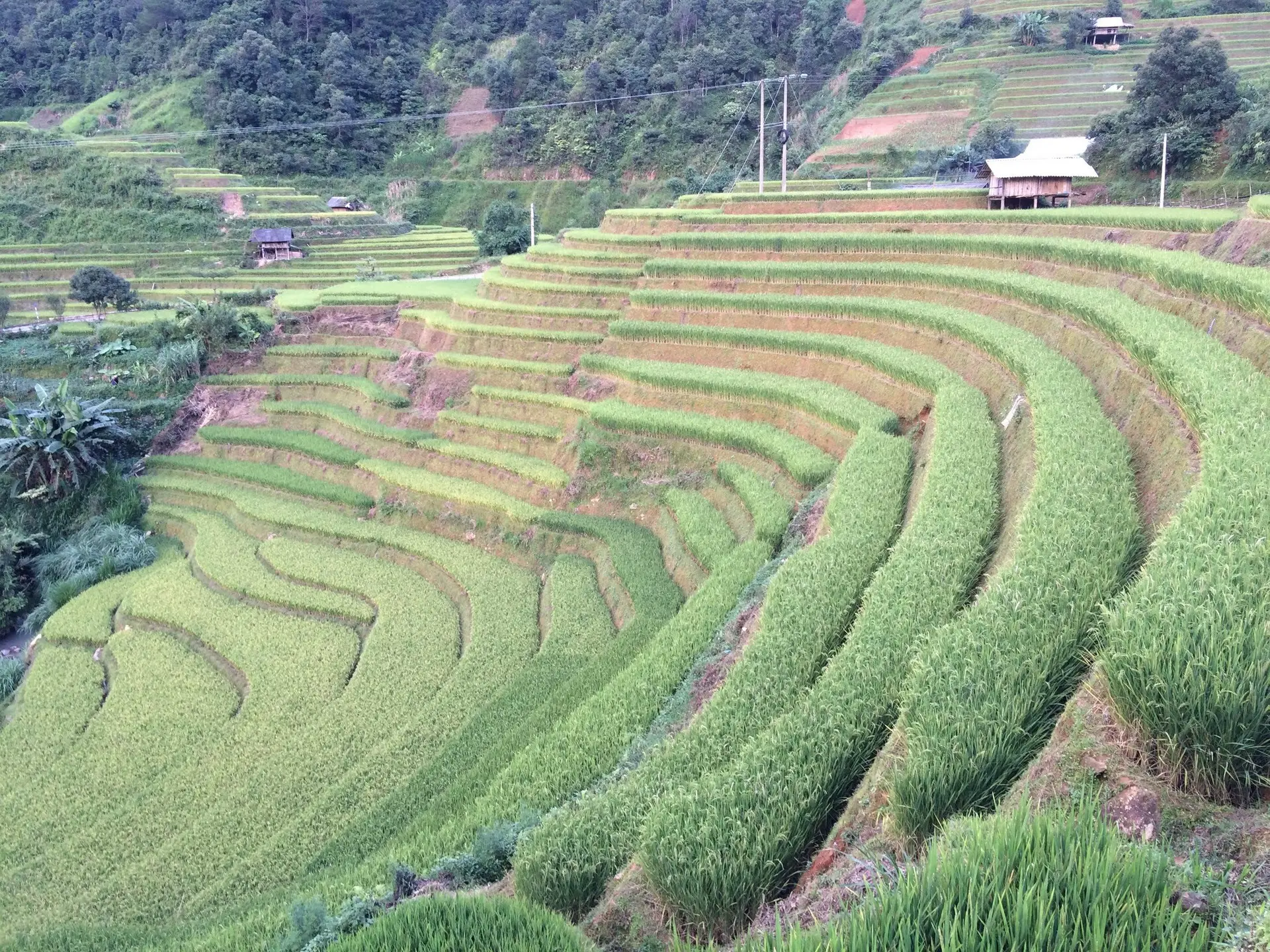
Lush green terraces and full waterfalls in the wettest months. The Tú Lệ valley starts to turn gold in mid-August.
The young rice turns the terraces bright green, and the waterfalls are at their fullest. From mid-August the lower Tú Lệ valley begins to ripen, and in some years the festivals start in late August.
Mid-September to mid-October (Tú Lệ: mid-August to early September)
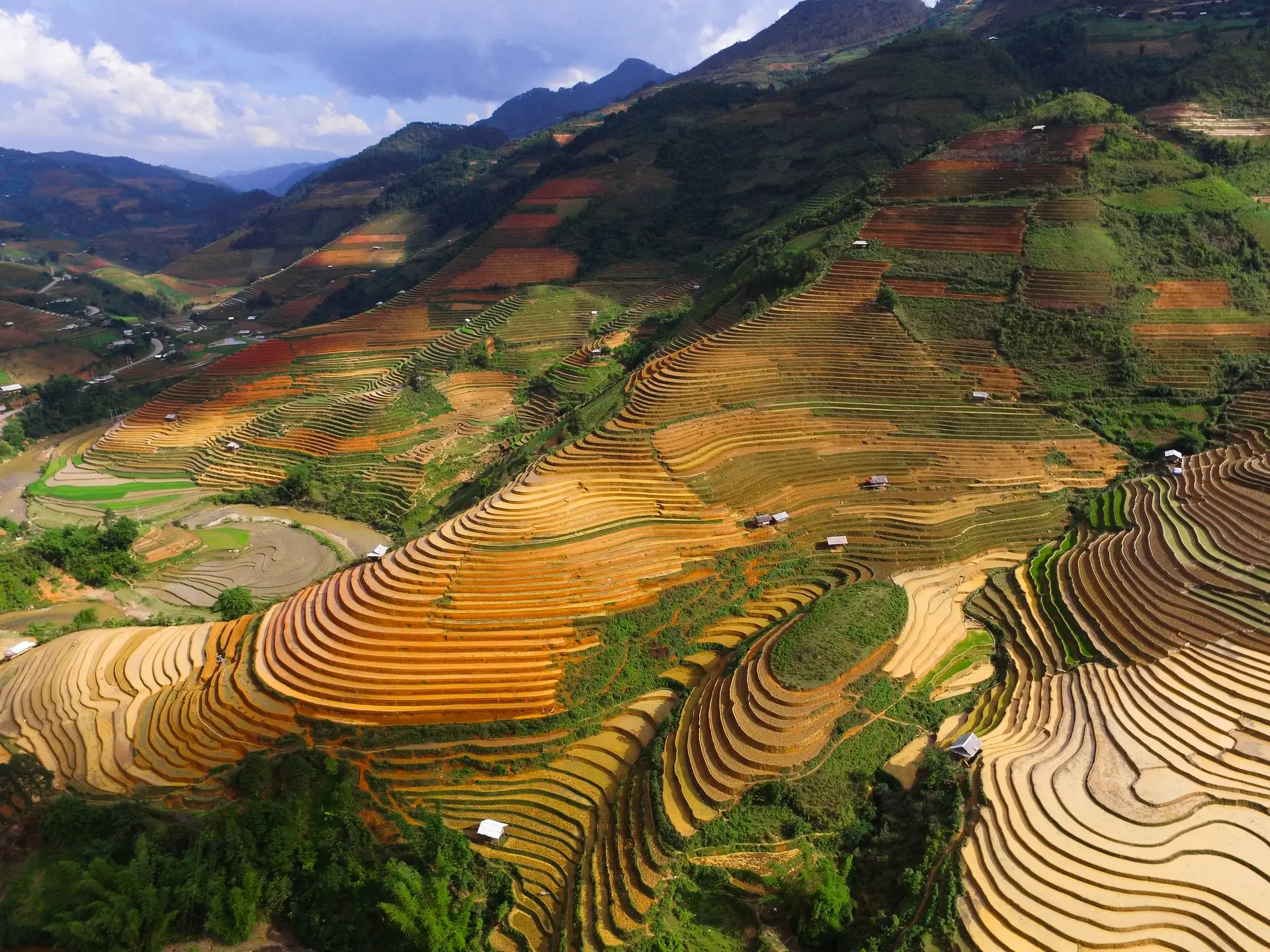
The rice ripens from the valleys up to the high terraces. The colour usually peaks in the last week of September and the first week of October, and then the harvest begins.
The rice ripens from the valleys upwards. Tú Lệ and the foot of Khau Phạ peak from mid-August to early September. The high terraces of La Pán Tẩn, Chế Cu Nha and Dế Xu Phình follow from mid-September to mid-October. Harvesting starts in late September, so the fields change quickly.
Festivals usually run from late August to October: paragliding at Khau Phạ, the Tú Lệ cốm festival, the golden-season festival, the Hmong New Rice ceremony in Púng Luông and the Mù Cang Chải Ultra Trail. Dates change every year.
We do not have a good photo of this season yet.
Late October to November
Harvested terraces and drying rice straw in cool, dry weather, with seas of cloud at dawn and far fewer visitors.
After the harvest the fields are left as stubble. The dry season from October to March is the best time to see seas of cloud from high points such as Khau Phạ, and the ridges are comfortable for trekking.
| Month | Average high | Average low | Rain | Season |
|---|---|---|---|---|
| January | 19 °C | 11.8 °C | 51 mm | |
| February | 21.5 °C | 13.9 °C | 44 mm | |
| March | 25.1 °C | 16.9 °C | 61 mm | |
| April | 27.1 °C | 19.5 °C | 105 mm | |
| May | 28 °C | 21.1 °C | 213 mm | |
| June | 27.7 °C | 22 °C | 342 mm | |
| July | 27.6 °C | 22 °C | 425 mm | |
| August | 27.4 °C | 21.7 °C | 424 mm | |
| September | 26.9 °C | 20.8 °C | 257 mm | |
| October | 25 °C | 18.7 °C | 120 mm | |
| November | 22.8 °C | 15.8 °C | 46 mm | |
| December | 19.6 °C | 12.5 °C | 39 mm |
Average temperatures and rainfall near the hotel (about 940 m), from ERA5 reanalysis data for 2006–2025. Reanalysis smooths out the mountains, so valley nights may be colder than shown and rainfall is probably overestimated. For comparison, Weather Atlas gives a January mean low of 9.6 °C and 265 mm of rain in August, the wettest month. Viewpoints at 1,500–1,900 m are several degrees colder than the town.
January
The terraces are fallow. Pink tớ dày blossom continues into January, followed by peach blossom. Cool days, cold nights and frost possible on Khau Phạ. Quiet, except on blossom weekends.
February
Plum blossom, Lunar New Year and the Hmong spring festivals such as Gầu Tào. One of the driest months. Busy over the Lunar New Year holiday, otherwise quiet.
March
Farmers repair the terrace walls and plough. Dry and warming up. Low season, good for walking.
April
The fields are prepared for planting, and the first rains arrive late in the month. Warm and quiet.
May
Where the rain allows, farmers flood the terraces, usually from mid- to late May. Rain increases sharply. Photographers arrive, and weekends are busier.
June
Flooded terraces and rice planting, usually at their best in early June; later in dry years. Very rainy, with a risk of landslides. Moderately busy.
July
Bright green terraces and full waterfalls. The wettest time of year. Quiet.
August
Still green on the high terraces, while the Tú Lệ valley turns gold from mid-August. Festivals often start in late August. Very wet. Busy from late August.
September
The gold moves uphill, reaching the high terraces from mid-September, and harvesting starts late in the month. Peak season: weekends and the 2 September holiday fill up.
October
Golden in the first half of the month, then the harvest. Rain eases and mornings can be misty. Busy in the first half, then quieter.
November
Harvested fields and drying straw, with seas of cloud at dawn. Dry and cool. Quiet, and good for trekking.
December
Cold and dry. Tớ dày blossom from mid-December. Quiet.
Most festivals follow the rice: they usually run from late August to October.
In the golden season you may find the paragliding festival at Khau Phạ, the Tú Lệ cốm festival, the Mù Cang Chải golden-season festival, the Hmong New Rice ceremony in Púng Luông and the Mù Cang Chải Ultra Trail. In winter there is a tớ dày blossom festival, and the Hmong celebrate Gầu Tào around Lunar New Year.
Dates change every year. Message us on WhatsApp or Zalo and we will tell you what is on during your stay.
Check availabilityMid-September to mid-October, when the rice turns gold; the colour usually peaks in the last week of September and the first week of October. For flooded, mirror-like terraces, come from late May to early June. For blossom, come from December to February.
It depends on the weather and the altitude: the rice ripens from the valleys upwards, and the timing moves by a week or two from year to year. Message us on WhatsApp or Zalo and we will send you a current photo.
Local guides recommend at least two days and one night. With three days you can add the Tú Lệ valley, paragliding at Khau Phạ or a trek through Hmong villages.
Days are mild to warm, evenings are cool and it is cold from December to February, especially at the viewpoints. Bring layers and a warm jacket, rain gear from May to September, and shoes with good grip for muddy terrace paths.
No. They are a Special National Relic of Vietnam, a status given by Prime Minister's Decision 1954/QĐ-TTg on 31 December 2019. More than 800 hectares of terraces are protected.